
Call 312-384-1940 Schedule Now
young man working on his mental health at work.
My Mental Health at Work: Strategies for Midlife Challenges

For many adults, midlife is a time of self-reflection, shifting priorities, and redefining what balance looks like. But this chapter can also introduce unique stressors that significantly impact mental health — particularly in the workplace. Juggling career demands alongside family responsibilities, personal goals, and health concerns can leave many feeling overwhelmed and uncertain about the next steps.

At Wellington Counseling Group, we recognize that mental health touches everyone at every stage. Our clinicians serve the Chicago area in our River North and Lakeview offices, as well as the surrounding Chicagoland suburbs. If you’ve been feeling stretched thin between work and life responsibilities, know that you’re not alone — and there are effective, evidence-based strategies to help you feel more grounded.

Understanding Midlife Mental Health at Work

Work can be both fulfilling and stressful, but for adults in midlife, the balance often becomes more complex. Factors like career transitions, the emotional strain of children leaving home, and caring for aging parents can create layers of responsibility that influence your well-being.

Common midlife workplace challenges include:

  • Feeling stuck or stagnant in your career or unsure about the next step.
  • Experiencing new anxiety and depression linked to evolving priorities.
  • Managing declining motivation or increased fatigue.
  • Struggling with work-life balance while juggling competing demands.

Understanding how these transitions affect your emotional health is the first step toward finding effective solutions.

The Connection Between Work Stress and Mental Health

Unaddressed mental health issues can significantly affect performance, relationships, and overall satisfaction at work. Midlife adults may face:

  • Emotional strain: Persistent worry, frustration, or sadness.
  • Physical symptoms: Trouble sleeping, headaches, fatigue, or changes in appetite.
  • Relationship conflicts: Tension with coworkers, managers, or family members due to increased stress.
  • Declining productivity: Difficulty focusing or managing daily tasks.

It’s important to recognize these signs early so you can navigate mental health challenges before they escalate.

Effective Strategies to Manage Mental Health at Work

At Wellington Counseling Group, we often help clients develop practical, evidence-based strategies to support mental wellness while maintaining professional fulfillment. Here are some approaches we recommend:

1. Build Emotional Awareness

Begin by tuning into your thoughts, feelings, and behaviors. Recognizing patterns — such as negative thinking, irritability, or withdrawal — allows you to address stress before it becomes overwhelming.

Tip: Keep a simple journal to track your moods and identify workplace triggers.

2. Set Healthy Boundaries

It’s common for midlife adults to take on extra responsibilities — both at work and at home — but overcommitting can quickly lead to burnout. Establishing boundaries around work hours, availability, and personal time is essential for balance.

Example: If you work in downtown Chicago, setting limits on after-hours emails can help protect your evenings and allow you to recharge.

3. Seek Mental Health Support

When workplace challenges intersect with personal transitions, talking with a qualified professional can make a tremendous difference. Working with a therapist provides a safe, confidential space to explore what’s happening beneath the surface and develop coping strategies.

Mental health professionals can help you:

  • Manage anxiety and depression related to workplace stress.
  • Adjust to career transitions or leadership changes.
  • Develop practical skills for conflict resolution and communication.
  • Explore personal goals to create a sense of purpose at work.

4. Navigate Career Transitions

Midlife often brings questions like: “Am I on the right path?” or “What’s next for me professionally?” These reflections can feel unsettling but are also an opportunity for growth.

A therapist can help you process career-related changes, explore new possibilities, and develop strategies to manage uncertainty — whether you’re seeking advancement, switching fields, or planning for retirement.

5. Practice Mindfulness and Stress Management

Even small, daily habits can make a significant difference in managing workplace stress. Techniques like deep breathing, meditation, and short mindfulness exercises can help you reset and refocus during the day.

Try this: Take a few minutes between meetings to step outside, breathe deeply, and intentionally shift your attention back to the present moment.

The Role of Family and Personal Life in Workplace Stress

Workplace stress doesn’t happen in isolation. Major life transitions — like children leaving home or caring for aging parents — can amplify the emotional weight you carry into the office. Recognizing these influences allows you to approach challenges with greater compassion for yourself.

If personal responsibilities are impacting your job performance, it may help to communicate openly with your employer or seek accommodations when possible. Many workplaces in Chicago are expanding their focus on mental health, offering employee assistance programs and flexible work options to support balance.

Why Professional Mental Health Support Matters

While coping strategies are valuable, some midlife challenges require deeper exploration with a professional. Seeking therapy isn’t a sign of weakness — it’s an act of resilience.

At Wellington Counseling Group, our licensed mental health professionals specialize in helping adults navigate the unique complexities of this life stage. We provide personalized care to address:

  • Workplace stress and burnout
  • Anxiety and depression
  • Career transitions
  • Family and relationship dynamics
  • Developing a greater sense of balance and purpose

Whether you prefer individual counseling, group therapy, or skill-building workshops, we create a safe and supportive space to help you thrive.

Finding Support in Chicago

Midlife brings both challenges and opportunities, and you don’t have to face them alone. Our Chicago-based team serves clients in the area and surrounding suburbs, offering compassionate care designed to meet your unique needs.

Our Executive Functioning Coaching program provides structured, evidence-based support for individuals who want to strengthen practical skills like organization, time management, and follow-through. Coaching bridges the gap between therapy and daily life, helping you apply new strategies consistently in real-world settings — from the workplace to home routines.

The Men’s Midlife Mix group provides practical tools, peer support, and evidence-based care to help you regain balance and purpose.

If your workplace stress, family responsibilities, or personal transitions are starting to feel overwhelming, we’re here to help you navigate these experiences and rediscover what fulfillment can look like.

Take the First Step Today

Addressing mental health challenges during midlife can transform not only your workplace experience but also your overall quality of life. Seeking support is the first step toward greater balance, connection, and purpose.

Contact Wellington Counseling Group today to schedule a confidential consultation. Together, we’ll work toward creating sustainable strategies to improve your well-being at work and beyond.


Insurance and Mental Health: How to Get Coverage for Therapy in Chicago

Seeking mental health services is an important step toward overall well-being, but figuring out how to pay for care can feel overwhelming. Between understanding your health benefits, navigating your insurance card, and coordinating with providers, the process can quickly become confusing.

At Wellington Counseling Group, our clinicians serve the Chicago area in our River North and Lakeview offices, as well as the surrounding Chicagoland suburbs.  We know that getting the right mental health care starts with understanding how your coverage works. This guide breaks down how to access health support, work with your insurance company, and connect with qualified therapists or psychiatrists who meet your needs.

Step 1: Understand What Your Insurance Covers

The first step is reviewing your insurance card and learning exactly which mental health services are included in your plan. Most health insurers offer coverage for behavioral health, which may include:

Check your plan’s summary of benefits or call the customer service representative listed on your insurance card. They can help you clarify:

  • Which services are covered
  • Whether you have copays or coinsurance
  • If pre-authorization is required
  • The number of covered sessions per year

Being informed upfront can prevent surprise bills and make the process less stressful.

Step 2: Choose the Right Mental Health Professional

Your insurance provider can often provide a list of therapists or psychiatrists in-network, but finding the right fit involves more than just checking coverage. Consider your needs when selecting a provider:

  • Therapists and Counselors — Specialize in talk therapy, including approaches like CBT, mindfulness, and relationship-based counseling.
  • Psychiatrists — Can prescribe and manage medications as part of a comprehensive treatment plan.
  • Integrated Care Teams — In some cases, therapy and medication management work best when coordinated between providers.

If you already see a primary care doctor, they may also recommend qualified health professionals in the Chicago area who work closely with your insurance plan.

Step 3: Verify Coverage Before Scheduling an Appointment

Before you schedule an appointment, confirm that your chosen provider is in-network. Contact your insurance company directly or check their website for up-to-date listings.

Questions to ask your insurer include:

  • “Does my plan cover individual therapy?”
  • “Are mental health services included?”
  • “Do I need a referral from my primary care doctor?”
  • “What is my responsibility for copays or deductibles?”

By verifying coverage before beginning mental health care, you’ll avoid unexpected costs and ensure you can focus on healing.

Step 4: Navigating Out-of-Network Care

In some cases, you may choose a provider who is out-of-network because of their specialization, location, or experience. While this can involve higher costs, many health insurers offer partial reimbursement for these services.

Ask your insurance company if they provide out-of-network benefits and what paperwork you’ll need to submit. At Wellington Counseling Group, our team can provide the necessary documentation to help you work directly with your insurance provider.

Step 5: Advocate for Your Mental Health

Understanding your health benefits is just the first step — advocating for yourself is equally important. If you experience barriers to care, consider:

  • Calling your customer service representative to ask for clarification on denied claims.
  • Requesting a case manager for support with ongoing treatment needs.
  • Exploring financial assistance or payment plans when coverage isn’t sufficient.

In Chicago, many providers — including Wellington Counseling Group — strive to make care as accessible as possible by helping clients navigate the insurance process.

Getting Started with Mental Health Support in Chicago

Navigating insurance shouldn’t stand in the way of getting the mental health support you deserve. At Wellington Counseling Group, we work closely with our clients to help them understand their health benefits, connect with the right health professionals, and create personalized care plans.

Whether you’re seeking therapy for anxiety, depression, relationship concerns, or other behavioral health challenges, we’re here to make getting started easier.

Take the First Step Toward Care

Understanding your insurance coverage can feel overwhelming, but you don’t have to navigate it alone. Our team at Wellington Counseling Group is here to help you explore your options, connect with trusted therapists or psychiatrists, and access the mental health services you need.

Contact us today to schedule a confidential consultation. Together, we can create a plan that supports your emotional well-being and connects you to the resources that matter most.

woman with social anxiety.
Social Anxiety in Adults: Why It Happens and How to Overcome It

While it is normal to feel anxiety on a rollercoaster, or before a big presentation, living with social anxiety disorder goes far beyond occasional nerves. Adults with this condition can feel intense, persistent, and disruptive anxiety that impacts their daily life.

At Wellington Counseling Group, with locations in Chicago, we frequently work with adults who have struggled with social anxiety disorder for years. Though often mistaken as shyness or introversion, social anxiety is a diagnosable condition that requires care. Thankfully, it is also highly treatable with many effective evidence-based resources to help.

What Is Social Anxiety Disorder?

According to the Diagnostic and Statistical Manual of Mental Disorders (DSM-5), social anxiety disorder involves intense fear and anxiety related to social or performance situations. The fear usually centers around being judged, embarrassed, or negatively evaluated by others.

Symptoms of social anxiety disorder include:

  • Avoiding social situations such as parties, meetings, or speaking in public
  • Worrying for days or weeks before an event
  • Difficulty making eye contact or starting conversations
  • Physical symptoms of anxiety like blushing, sweating, trembling, or nausea
  • A constant fear of saying or doing the “wrong” thing

Social anxiety can look different for different people—some feel it in all social settings, while others are situation specific, like public speaking or eating in front of a group.

Why Does Social Anxiety Happen?

People with social anxiety often have a pattern of negative thoughts about themselves and how others perceive them. These beliefs may stem from:

  • Genetics or a family history of anxiety
  • Traumatic or embarrassing social experiences in childhood or adolescence
  • Underlying issues with self-esteem or perfectionism

Associations in the brain begin to develop over time, associating social situations with danger, and triggering the fight-flight-freeze response. While in this emotional state, it can feel safer to withdraw or avoid social situations altogether, leading to issues in daily life.

Short-Term and Long-Term Effects

In the short term, avoiding social situations can bring immediate relief. Skipping a party, staying quiet in meetings, or declining a phone call may ease anxiety in the moment, but that relief often comes at a cost—missed opportunities for connection, increased self-criticism, and a growing sense of isolation. Avoidance can also make everyday interactions feel even more intimidating over time.

Left unaddressed, social anxiety can have long term effects. It may interfere with relationships, limit career growth, and contribute to depression, substance use, and chronic stress. The longer avoidance patterns continue, the more deeply they can become ingrained.

The good news? Social anxiety disorder is treatable. With the right support—through therapy, medication, or a combination—you can learn to manage symptoms, break the cycle of avoidance, and build confidence in social situations.

How to Treat Social Anxiety Disorder

Treatment typically includes a combination of therapy, medication, and lifestyle changes. The approach depends on the severity of symptoms and your individual goals.

1. Therapy

There are a number of therapy approaches, including Cognitive Behavioral Therapy (CBT), that treat social anxiety disorder, helping individuals:

  • Identify and challenge negative thoughts
  • Develop realistic beliefs about social situations
  • Build practical coping skills while facing fears over time

Therapy can provide insights and skills for long-lasting change.

2. Medication

In some cases, Selective Serotonin Reuptake Inhibitors (SSRIs) or other anti-anxiety medications are prescribed to reduce symptoms and improve quality of life. These can be especially helpful when used alongside therapy.

Speak to a mental health professional to determine if medication is right for you.

3. Support Groups and Social Practice

Support groups offer a safe space to share experiences, practice social interactions, and reduce feelings of isolation. For instance, practicing exposure-based exercises can help retrain the brain’s response to social triggers and reduce the fight-flight-freeze response.

Over time, what once felt overwhelming can become more manageable—and possibly even enjoyable.

Building Confidence, One Step at a Time

If you live with social anxiety, know this: you’re not alone. Many adults manage these challenges daily, even if it’s not visible from the outside. The key is to take things one step at a time.

Start small:

  • Set manageable, achievable, and scalable social goals
  • Focus on self-compassion instead of self-criticism
  • Celebrate progress—even the small actions 

If you’re feeling stuck, talk to someone. Working with a therapist can help you navigate setbacks, reframe old beliefs, and build new thought and behavior patterns.

Final Thoughts

Social anxiety disorder is more than nervousness—it’s a treatable condition that deserves understanding and support. You don’t have to keep avoiding situations or hiding your discomfort. With the right tools, you can move out of fear toward connection, confidence, and emotional freedom. If you’re ready to take the next step, contact Wellington Counseling Group to schedule a session in Chicago. Our experienced team is here to help you build the skills and insight to feel more at ease in your own skin—and in the world around you.

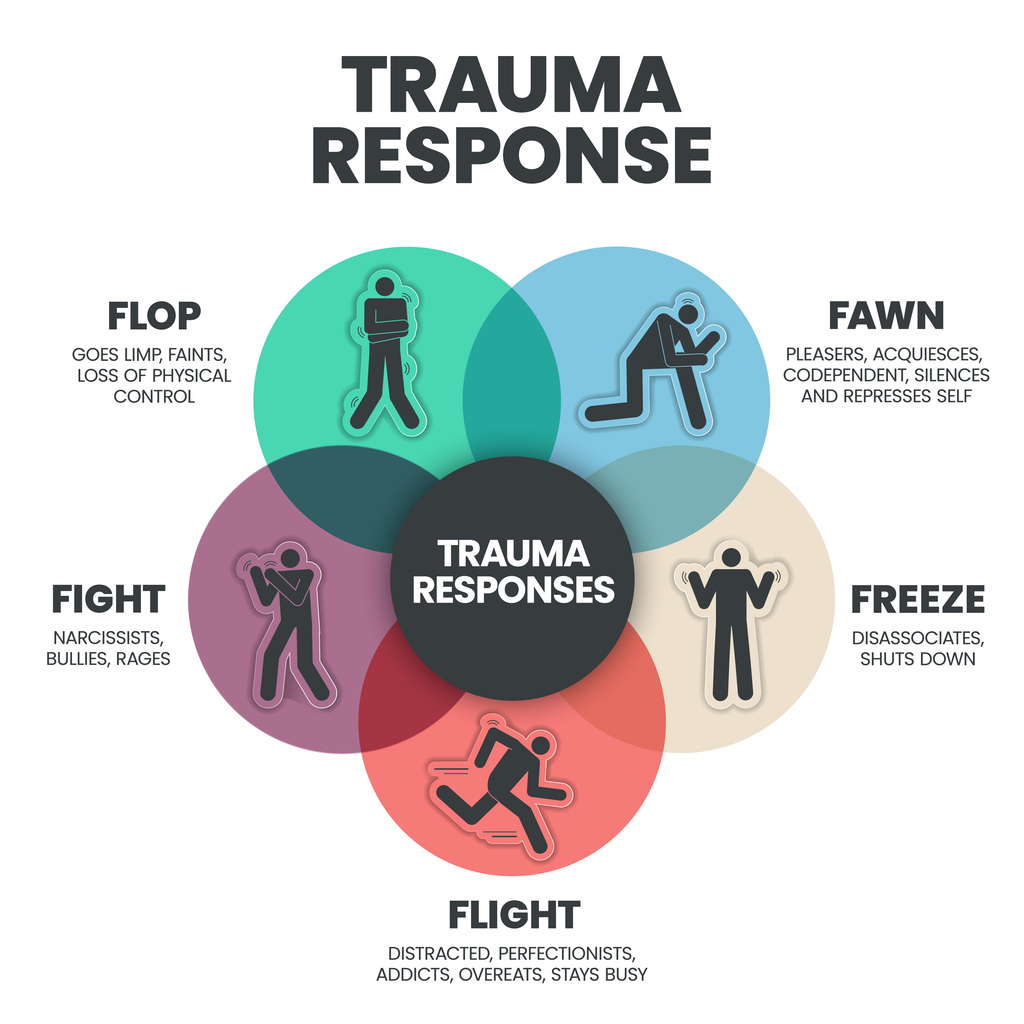
Fear Responses Model infographic presentation template with icons is a 5F Trauma Response such as fight, fawn, flight, flop and freeze. Mental health and Personality Type concept. Education vector.
Trauma Responses: Fight, Flight, Freeze, or Fawn—Which Are You Experiencing?

Traumatic events trigger our bodies and minds to react instinctively and protect us. These trauma responses, known as fight, flight, freeze, or fawn, are a natural part of our  stress response system. However, what helps us survive perceived danger can, over time, become a pattern that shapes how we respond to everyday stressful situations.

At Wellington Counseling Group, with offices in Chicago, we work with clients who are exploring the impact of past traumatic experiences on their present-day lives. Knowing your primary trauma response can be a powerful step toward healing.

What Are Trauma Responses?

Our nervous system is primed to respond to threats. When we encounter danger—real or perceived—survival mechanisms kick in to keep us safe. These responses helped our ancestors escape predators, and they still activate today when we feel unsafe.

Depending on the type of trauma, your history, and your environment, these four responses can show up in different ways. Including:

1. Fight Response

The fight response activates when we confront a threat head-on. This can look like:

  • Arguing, yelling, or becoming defensive
  • Feeling the need to control a situation or others
  • Reacting quickly with anger or frustration

This response often comes from a deep need to reassert safety or control. For trauma survivors, the fight mode may feel like the only way to protect themselves.

2. Flight Response

In the flight response, the focus is on escaping. Signs include:

  • Avoiding people, places, or conversations
  • Feeling restless, anxious, or an inability to relax
  • Overworking, chronic business, or perfectionism as a distraction technique

This response can be rooted in stressful situations where escape feels like the safest option. In adulthood, it might translate into leaving jobs, relationships, or obligations too quickly.

3. Freeze Response

The freeze response is often described as playing dead. You may feel:

  • Paralyzed or numb in moments of stress
  • Disconnected from your body or surroundings
  • Stuck or unable to make decisions

This response can leave people feeling helpless or ashamed, but it’s a common reaction to trauma—especially when escape or defense isn’t possible.

4. Fawn Response

The lesser-known fawn response involves appeasing others to avoid harm. This might look like:

  • People pleasing to keep peace
  • Saying yes when you want to say no
  • Struggling with setting boundaries
  • Trying to avoid conflict

This response often develops in environments where safety depended on keeping others happy. Over time, the fawn response can erode your sense of self.

Why These Patterns Stick Around

Trauma responses are meant to be temporary. We encounter danger, run or fight, and return to safety. But if the original trauma was ongoing, unresolved, or occurred in childhood, the brain and body can get stuck in survival mode.

In the long term, these patterns can interfere with relationships, work, self-worth, and mental health. You may also feel chronically on edge, exhausted, or disconnected from your needs. Many trauma survivors don’t even recognize these as trauma responses—they have been feeling this way for so long that it starts to seem like this is “just who I am.”

But these are not character flaws. They are adaptations. And with the right support, they can shift.

Healing Starts with Awareness

The first step is identifying your default response(s). You might notice you react with different strategies depending on the situation or person involved. 

Start by asking:

  • When do I feel most reactive or triggered?
  • How do I tend to respond when I feel unsafe or overwhelmed?
  • What does safety mean to me?

Working with a trauma-informed therapist can help you explore these patterns, identify their roots, and develop new strategies that support healing and connection.

Therapy Can Help You Rewire

Therapy provides a safe environment to:

  • Understand your stress response system
  • Practice grounding and regulation techniques
  • Explore boundary setting and healthy communication
  • Reclaim parts of yourself that were shaped by survival

At Wellington Counseling Group, we use approaches like somatic therapy, EMDR, and cognitive-behavioral tools to help clients process trauma in a way that feels safe and empowering.

Trauma doesn’t have to define your present. It’s possible to learn how to respond from a place of intention instead of instinct.

Final Thoughts

Whether you fight, flee, freeze, or fawn, know that your emotions are valid. These responses helped you survive, and now you have the opportunity to choose something different.

If you’re ready to explore your trauma responses and begin your healing journey, reach out to Wellington Counseling Group to schedule a session in Chicago. Our team is here to support you in finding safety, clarity, and connection—on your terms.

woman in therapy.
How Long Does Therapy Take? Understanding Timelines and Progress

One of the most common questions we hear from people seeking therapy is, “How long will this take?” It’s certainly a fair question. The answer? Everyone’s experience is different. Therapy is not one-size-fits-all, and timelines can vary based on several key factors. Read on to understand what might influence your therapeutic timeline.

At Wellington Counseling Group, with offices in Chicago, we support and help clients navigate their mental health journeys at their own, sustainable pace. Whether you’re seeking out therapy to deal with a recent stressor or wanting to work through long-standing patterns, it’s helpful to understand what factors influence the duration and progress of therapy.

Key Factors For Length of Therapy

1. Type of Therapy

Different therapeutic approaches come with different timelines. For example:

  • Cognitive Behavioral Therapy (CBT) is often a shorter term, goal-oriented approach, that focuses on current thoughts and behavior patterns, lasting anywhere from 12 to 20 sessions, depending on the issue.
  • Psychodynamic therapy on the other hand, tends to be longer term, exploring deeper unconscious processes, childhood experiences, and relationship dynamics that unfold more slowly over time.

Other modalities such as EMDR, solution-focused therapy, or integrative approaches can be short, or long-term, depending on the severity and complexity of a patient’s needs. Work with your therapist to determine the best type of therapy for you, as it will play a significant role in how long the process takes.

2. Nature and Severity of the Issue

As mentioned, the severity and complexity of the issues play a significant role in the length of time spent in therapy. While some concerns respond quickly to targeted intervention, (like social anxiety or a recent breakup), more complex mental health conditions, (like trauma, depression, and personality disorders), may require longer-term support.

Think of it this way: some issues are like a sprained ankle—you need a little rest and support to get back on track. Others are more like learning to walk again after surgery—slower, deeper, and requiring steady guidance. The same goes for emotional and psychological issues, where timelines adjust to fit your needs.

3. Therapeutic Relationship

Finding the right therapist is key to your recovery. A strong, trusting therapeutic relationship can increase the speed at which you are able to make significant improvements. Alternatively, if you don’t feel safe, understood, or challenged by your therapist, it can take longer to make progress. Be honest with yourself and your therapist about how you’re feeling, and if something’s not right, it may be time for a change.

4. Active Application

Most of the growth you’ll experience from therapy happens between sessions. By actively applying therapeutic insights into your daily life, you will begin to see more growth in less time. By journaling, setting boundaries, or practicing CBT exercises at home you can increase the speed at which changes are made.

5. Goals and Expectations

What you hope to achieve in therapy shapes the timeline. Are you looking for symptom relief or deeper personal growth? Do you want to address a single life challenge, or explore long-standing relational patterns? Your goals inform the structure and speed of treatment, so be sure to work with your therapist to find the approach that works for you.

What Does Progress in Therapy Look Like?

Progress is not always a straight line. Some therapy sessions may feel like breakthroughs, while others are more subtle, or even frustrating. Don’t worry. It is all part of the process.

You’ll know you’re making progress in therapy if:

  • You feel an increase in self-awareness and emotional regulation
  • You see improvements in your communication and relationships
  • Your distressing symptoms start to decrease
  • You gain greater clarity around your values and boundaries

You may see initial changes as early as the first few months, while  deeper emotional shifts can take more time. Therapy is a process and relationship, which both take time to nurture right.

Setting Realistic Expectations

When starting your therapeutic journey, it is important to set realistic expectations. Work with your therapist to collaboratively define goals, understand timelines, and check in on progress regularly. For instance, you might start with a short-term plan and then take time to reassess after 8 to 12 sessions.

Remember, it’s okay to ask: “How long might this take?” Your therapist may not be able to give an exact number, but after a few sessions of getting to know you, they can help provide an estimate and create a framework for you to review and adjust along the way.

Seeking Ongoing Support

While many clients will take breaks from therapy and return as needed, others may choose to continue therapy even after symptom relief. These clients may use the space for ongoing reflection, growth, or support as they navigate through new stages of life. 

Seeking out long-term support can be a loving choice, rooted in self-care. It is important to take your time, build emotional resilience, and integrate the insights from therapy into your life. This is your journey, make it work for you.

Final Thoughts

So, how long does therapy take? The honest answer is: it varies. But with the right support, a clear treatment plan, and your active participation, you can make meaningful progress at your own pace.

Therapy is not just about fixing problems; it’s about learning new ways of relating to yourself and others. Whether your path is short term or ongoing, the growth you gain can positively impact all areas of life. If you’re ready to explore therapy and what it might look like for you, contact Wellington Counseling Group to schedule a session in Chicago. Our experienced clinicians will help you create a plan that aligns with your goals and honors your timeline.

woman with Intergenerational Trauma.
Intergenerational Trauma: Can You Inherit Trauma from Your Ancestors?

When discussing trauma, much of the conversation focuses on the abuse, loss, violence, or traumatic event experienced by a single person. But what happens when pain extends beyond the individual? What if the anxiety, emotional distress, or hypervigilance comes from something bigger than the self? Welcome to the complex world of intergenerational trauma.

At Wellington Counseling Group, with offices in Chicago, we help individuals explore how their history—including family history—may be influencing their current experiences. Understanding the intergenerational effect of trauma can be a powerful first step towards breaking the cycle for your family and finding a new way forward for yourself..

What Is Intergenerational Trauma?

Intergenerational trauma is the transmission of traumatic experiences from one generation to the next. Studies show that a person doesn’t have to directly experience a traumatic event to feel its impact. For example, the child or grandchild of a trauma survivor might show signs of anxiety, depression, or emotional dysregulation—without fully understanding the cause.

This concept is backed by growing research in epigenetics, a field that studies how environmental factors—like trauma—can influence how our genes function without altering the genetic code itself. Through a process called epigenetic inheritance, the effects of trauma can potentially be passed down biologically to future generations.

How Trauma Is Transmitted Across Generations

Trauma is not passed down in the same way as eye color or height, but it can shape how families function and how we, as individuals, relate to the world. There are several key ways this transmission occurs:

1. Behavioral and Emotional Patterns

When a parent has experienced trauma, they may struggle with emotional regulation, attachment, or trust. These difficulties can show up in their approach to parenting, resulting in the unintentional passing down of fear, anxiety, or hypervigilance.

2. Family Narratives and Silence

Family stories play a big role in how people understand themselves. Sometimes, when past traumas are not talked about, families can carry unspoken grief, loss, or pain. This silence can create confusion or emotional distance in younger generations, who may sense something is wrong but don’t have the language or context to name it. Without this knowledge, negative emotions can turn inward, resulting in shame, blame, and disconnection

3. Biological Pathways

As we look beyond environmental factors, emerging research suggests that trauma can also leave a biological “mark” on the body. Stress can affect hormonal regulation, body mass, and even immune function in parents and offspring—potentially influencing epigenetic inheritance.

In studies of children and grandchildren of Holocaust survivors, for instance, researchers found elevated stress hormones and changes in gene expression—despite those descendants not having experienced the Holocaust themselves.

Recognizing the Signs

How can we know if we’re experiencing intergenerational trauma? Some individuals may carry emotional or psychological burdens that don’t seem to match their life experiences. 

Look for signs including: 

  • Persistent anxiety or fear with no clear source
  • Difficulty trusting others or forming close relationships
  • A strong sense of guilt or responsibility
  • Chronic feelings of sadness, anger, or emotional numbness
  • Recurring patterns of family conflict or estrangement

If you or someone in your family has ever been puzzled by emotional reactions that feel “bigger than the moment,” it might be worth considering whether parental trauma or earlier family wounds could be part of the story.

What You Can Do About It

The good news is that while trauma can be passed down, so can healing. Awareness is the first—and most important—step.

1. Seek Professional Support

Working with a mental health professional can help you explore generational patterns, process inherited pain, and begin to rewrite your story. At Wellington Counseling Group, our therapists specialize in trauma-informed care and can guide you through this process with compassion.

2. Understand Your Family History

Learning about your family’s past—both spoken and unspoken—can provide valuable context. Conversations with relatives, reading historical accounts, or even journaling can help piece together how the past might be influencing the present.

3. Break the Cycle Intentionally

Healing doesn’t mean pretending the past didn’t happen—it means giving it a place, making space for your feelings, and choosing how to move forward. 

You can learn how to:

By doing this work, you’re not just healing yourself—you’re helping end the cycle and prevent the transmission of trauma to future generations.

Final Thoughts

Intergenerational trauma reminds us that we are deeply connected to the people who came before us, while also showing our capacity for change. You may not be responsible for the pain you inherited, but you do have the opportunity to understand and heal from it.

If you’re ready to explore your own story and how it may connect to generational patterns, contact Wellington Counseling Group today to schedule a session in Chicago. Our clinicians are here to help you uncover the past, find your voice, and move toward a future with more clarity and peace.

Accessibility Toolbar